
How do you use the Shareholders Equity Formula to Calculate Shareholders Equity for a Balance Sheet?
February 21, 2024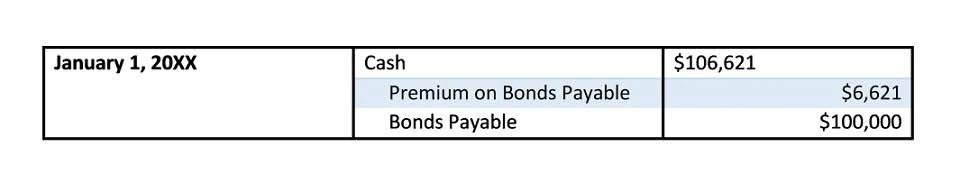
Accounting for ownership changes involves tracking transactions that affect the equity section, such as issuing new shares, repurchasing existing shares, and distributing dividends. These activities can significantly impact the overall equity balance, making accurate and transparent reporting essential. Companies must adhere to accounting standards to ensure that equity changes are recorded consistently and clearly. If you want to calculate the value of a company’s equity, you can find the information you need from its balance sheet.
Recording Shareholder Equity on Financial Statements
These shares are held in the company’s treasury and can be reissued or retired at a later date. APIC benefits the company by providing additional funds without incurring debt, but it doesn’t give individual investors any additional shares or power beyond their total investment purchases. The equity that belongs to the stockholders at the beginning of the comparative period after the adjustments.
- A term meaning behind, such as dividends in arrears, or something occurring at the end of a period, such as the recurring payment in an annuity in arrears.
- Regulatory bodies, such as the Securities and Exchange Commission (SEC), mandate specific reporting standards to maintain consistency and comparability across different companies.
- As the calculation shows, the weighted-average number of shares of common stock for the year was 1,325.
- These shares are held in the company’s treasury and do not have voting rights or receive dividends.
- It also helps to find out if the company has gone over its assets without accumulating enough earnings.
Equity: Meaning, How It Works, and How to Calculate It
- Statement of stockholder’s equity, often called the statement of changes in equity, is one of four general purpose financial statements and is the second financial statement prepared in the accounting cycle.
- Accounts Payables, or AP, is the amount a company owes suppliers for items or services purchased on credit.
- Liabilities also include amounts received in advance for a future sale or for a future service to be performed.
- It is the amount left with or kept aside by the company after it pays the dividend from net income.
- It should be used in conjunction with other tools and metrics to analyze a company’s financial health.
One notable example is the equity restructuring of a major corporation following a merger or acquisition. An alternative calculation of company equity is the value of share capital and retained earnings less the value of treasury shares. Subtracting liabilities from assets, we see that shareholders’ equity was therefore $66.8 billion ($331.2 billion -$264.4 billion). This is the same figure reported lower on the Remote Bookkeeping balance sheet, under shareholder equity. Company or shareholders’ equity can be determined by calculating the company’s total assets and liabilities.
Common Stock and Additional Paid-In Capital (APIC)
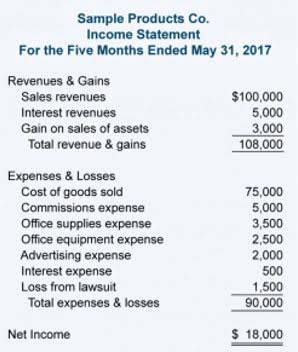
Recording shareholder equity on financial statements is an essential aspect of accounting for public companies. Shareholder equity represents the owners’ claim after all liabilities have been settled, and it is a key indicator of a company’s financial health. It is typically reported on the balance sheet under sections such as common stock, retained earnings, and additional paid-in capital. One of the main financial statements (along with the statement of comprehensive income, balance sheet, statement of cash flows, and statement of stockholders’ equity). The income statement is also referred to as the profit and loss statement, P&L, statement of income, and the statement of operations. The income statement reports the revenues, gains, expenses, losses, net income and other totals for the period of time shown in the heading of the statement.
Shareholder equity (SE) is a company’s net worth, or its total assets minus its total liabilities. It is equal to the total dollar amount that would be returned to the shareholders if the company were liquidated and all its debts were paid off. As illustrated by this Home Depot statement, stockholders’ equity equals total paid-in capital plus retained earnings minus treasury stock.
- Mezzanine transactions often involve a mix of debt and equity in subordinated loans, warrants, common stock, or preferred stock.
- Consider this actual balance sheet for Bank of America Corporation (BAC), taken from their 2023 annual report.
- In return for these preferences, the preferred stockholders usually give up the right to share in the corporation’s earnings that are in excess of their stated dividends.
- If a company theoretically sells all of its assets at book value and uses the proceeds to pay off all its liabilities, the money left over would represent the company’s stockholders’ equity.
- In all these metrics, changes in SE can significantly impact the results, affecting how investors and analysts interpret a company’s financial health, profitability, and valuation.
- This information is also maintained in the corporate secretary’s records, which are separate from the corporation’s accounting records.

This financial online bookkeeping document transparently provides investors with crucial information about their equity value. Here, we’ll assume $25,000 in new equity was raised from issuing 1,000 shares at $25.00 per share, but at a par value of $1.00. The excess value paid by the purchaser of the shares above the par value can be found in the “Additional Paid-In Capital (APIC)” line item. I have always thought of myself as a writer, but I began my career as a data operator with a large fintech firm.
How to Prepare a Statement of Stockholders’ Equity?
Equity represents the net value of a company, or the amount of money left over for shareholders if all assets were liquidated and all debts repaid. An asset is what a company owns and from which the liabilities are subtracted to obtain its equity value. In short, the asset value can be calculated by adding the firm’s equity and total debt or liabilities. Retained earnings, as the name implies, reflect the gains and losses carried forward to the next financial year. It is the amount left with or kept aside by the company after it pays the dividend from net income.
Companies must provide detailed disclosures about changes in ownership and capital structure, including stock issuances, repurchases, and dividends. These disclosures help investors and stakeholders understand the financial health and strategic decisions of the company. Small business owners must deal with numerous accounting reports to monitor their business’s finances and ensure its financial health. Profit and loss statements, accounts receivable aging reports and cash flow statements are just a few of the essential documents necessary for planning growth and staying on top of money matters. However, some small business owners may overlook the statement of shareholders’ equity ― part of the balance sheet ― while focusing on money coming into and leaving the organization.


It is an indispensable part of a shareholder’s equity, as it represents the amount of company’s stock sold to investors and issued to company officers and insiders. The total stockholders’ equity for a given period represents the total at the end of the period. To find the beginning stockholders’ equity for that period, look at the balance sheet for the preceding period. If a company theoretically sells statement of stockholders equity all of its assets at book value and uses the proceeds to pay off all its liabilities, the money left over would represent the company’s stockholders’ equity. Shareholders’ equity is, therefore, essentially the net worth of a corporation. If the company were to liquidate, shareholders’ equity is the amount of money that its shareholders would theoretically receive.